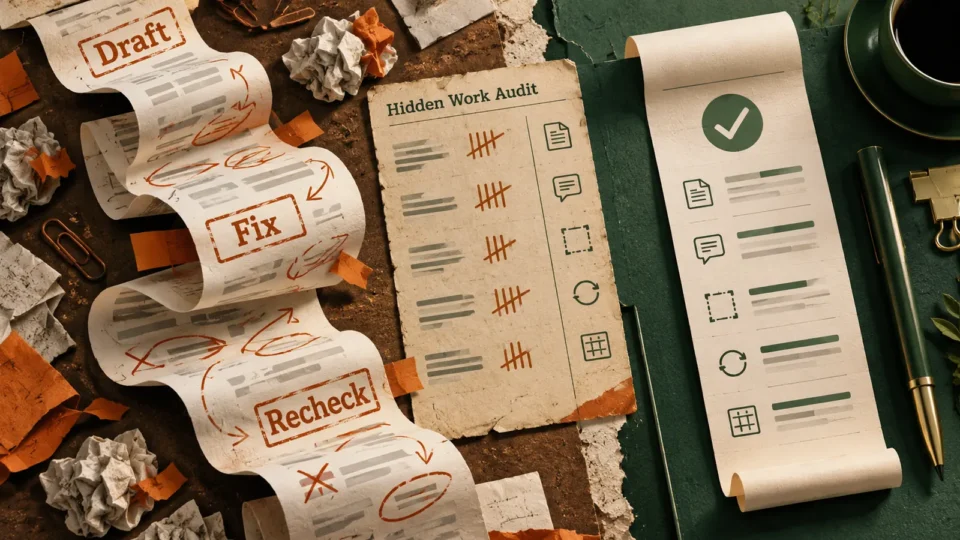
An AI-generated weekly update can read like a finished report even when one important claim has no evidence. That is especially risky when the summary is forwarded to a client, manager or another team that was not in the original conversation.
The fix is not to stop using AI for status reports. It is to separate what the draft says from what the source actually proves before anyone presses send.
Microsoft’s June 2025 Work Trend Index report describes how frequent messages and meetings fragment work. AI can help organise that information, but a tidy paragraph is not the same as a verified decision. The NIST AI Risk Management Framework similarly emphasises measuring and managing AI risks rather than assuming output is reliable.
The three claims that need different checks
Imagine a fictional operations team preparing its Friday update. An assistant reviews project notes and produces these sentences.
AI draft
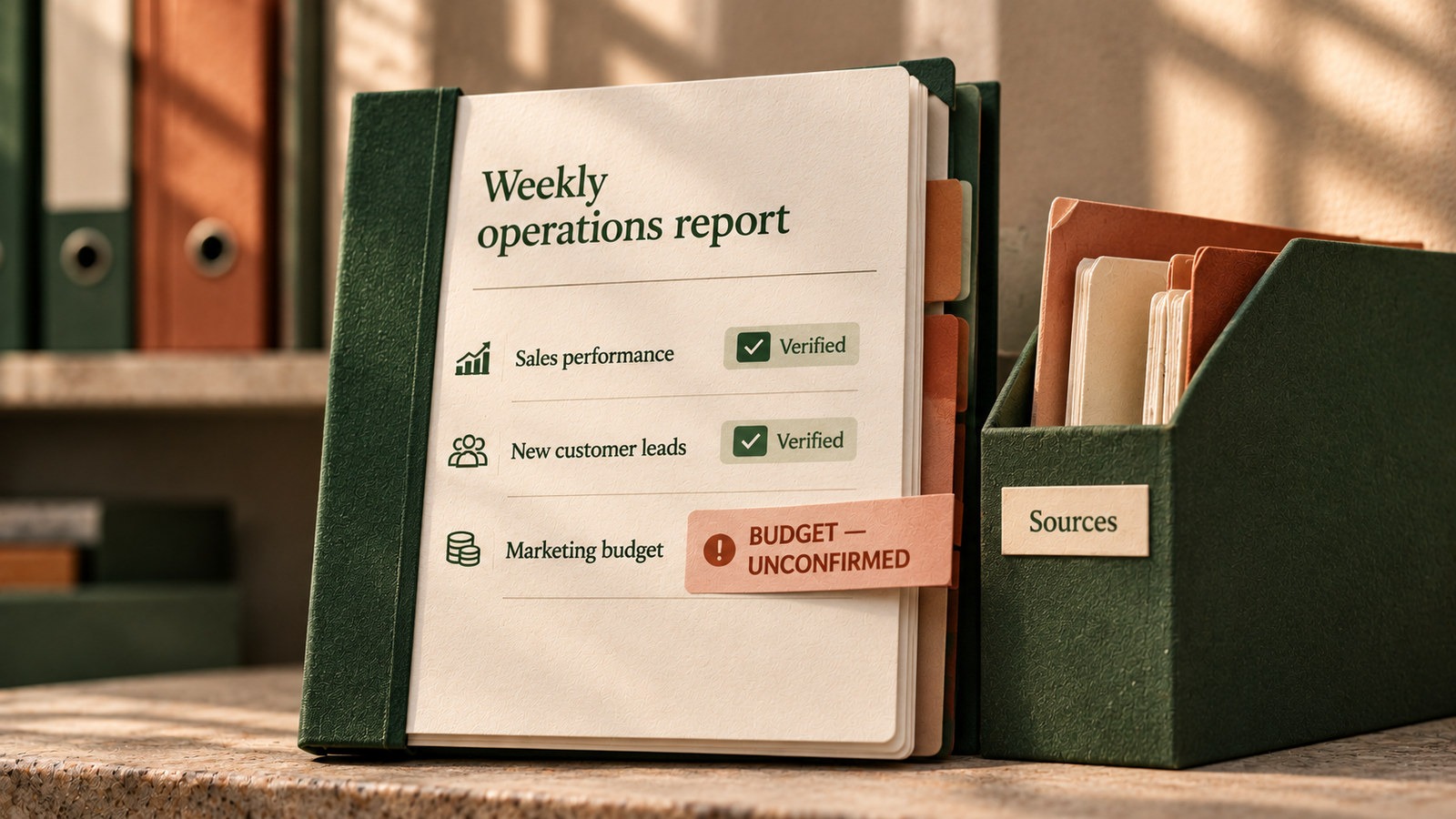
The launch date is confirmed for next month. The phase-two budget has been approved. Support tickets fell by 28 percent.
All three sentences sound equally confident. Their evidence is not equally strong.
The product roadmap may explicitly confirm the launch date. A help-desk export may support the ticket reduction, provided the dates and denominator match. But the budget sentence may come from a discussion about a proposed amount, not a signed approval. The safest version says the budget is awaiting confirmation, or omits that claim until an approver confirms it.
A polished summary is not evidence that the underlying work happened.
Build a five-column evidence check
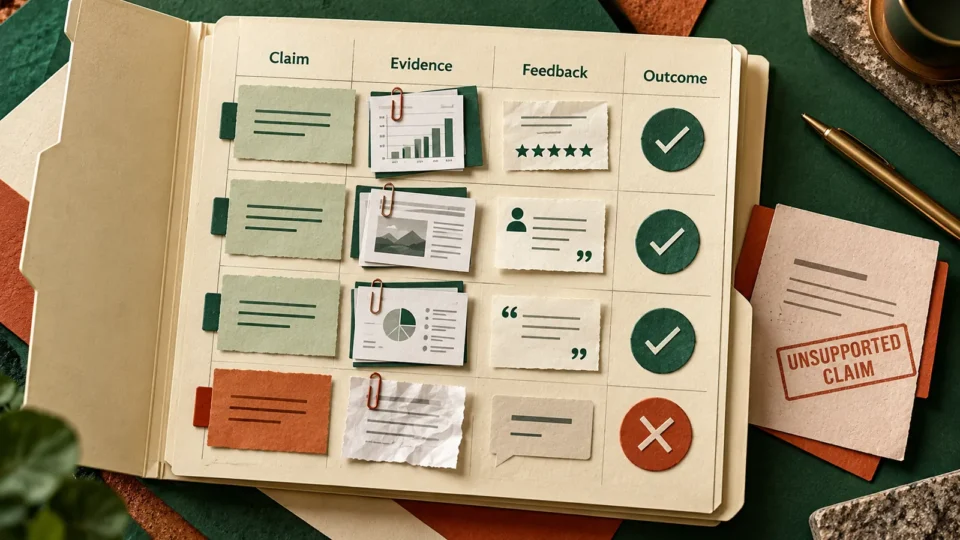
Open a small table with Claim, Original source, Source date, Verification result and Action. Keep it next to the report rather than burying the checks in another chat.
- Extract factual claims. Highlight dates, approvals, ownership, quantities, percentages and statements that work is complete.
- Find the source. Use the original roadmap, approved budget record, ticket export or written decision. A second AI summary is not independent evidence.
- Check the scope. Does the source cover the same period, team and definition as the sentence? A percentage without a comparison window can mislead.
- Assign a result. Mark each claim Verified, Needs evidence or Incorrect. Do not treat silence as approval.
- Revise before sharing. Remove unsupported certainty, link to approved evidence where appropriate, and have the responsible person review sensitive or consequential claims.
A ten-minute test
Take a recent AI-written update. Check only the five most consequential factual statements. Record how many had a primary source, how many needed correction and how long the review took. Repeat next week to see whether the workflow actually reduces rework.
A reusable prompt for your next update
Review the draft status report and the source material I provide. Extract every factual claim about dates, approvals, owners, completed work, quantities and performance. Create a table with the claim, exact supporting passage, source name, source date, confidence and review status. Use only Verified, Needs evidence or Incorrect. If evidence is absent, write Needs evidence rather than inventing a source. Do not infer approval from a proposal. For percentages, show the numerator, denominator and comparison period. Then rewrite the report using only verified claims, with unresolved items clearly labelled. Do not send or publish anything.
What to verify yourself
Check the actual approval owner, the current version of the roadmap, the date range in any metric, and whether a claimed action was completed or merely planned. Remove confidential customer details before using a tool that your organisation has not approved for that data. Ask the person accountable for the report to sign off on external-facing statements.
This method is especially useful for sales pipeline reports, campaign summaries, operations updates and meeting follow-ups. It is less useful when the source material itself is incomplete. In that case the honest output is a short list of questions, not a finished-looking report.
Sources
- Microsoft Work Trend Index report on the infinite workday, June 17, 2025
- NIST AI Risk Management Framework
- NIST AI Resource Center on testing and verification