An AI assistant can recommend an email campaign, a cheaper software plan or a new deadline in seconds. The answer can sound balanced while resting on a single assumption nobody checked.
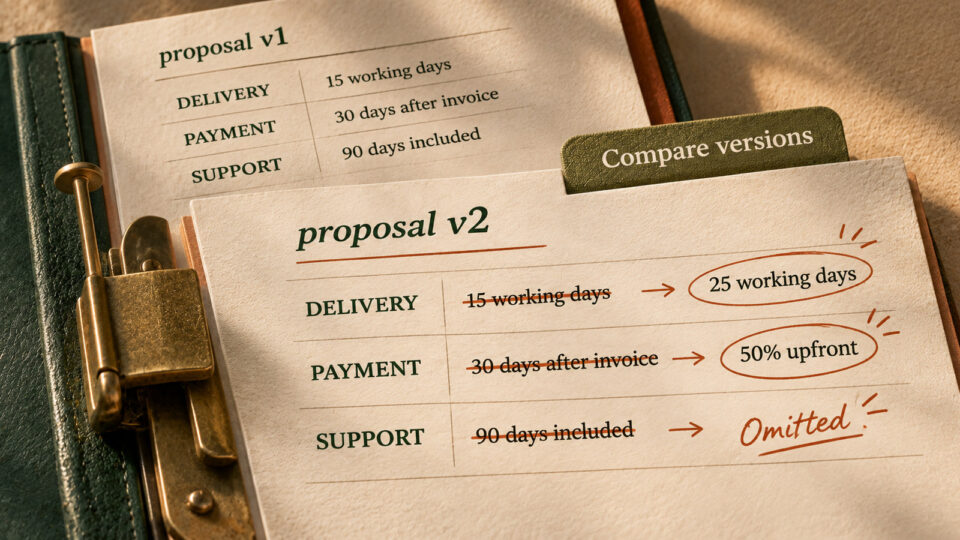
Before acting, ask what fact would make this recommendation wrong if it changed? This is a quick way to use AI to test a decision rather than simply defend its first answer.
A convincing answer can still depend on missing facts
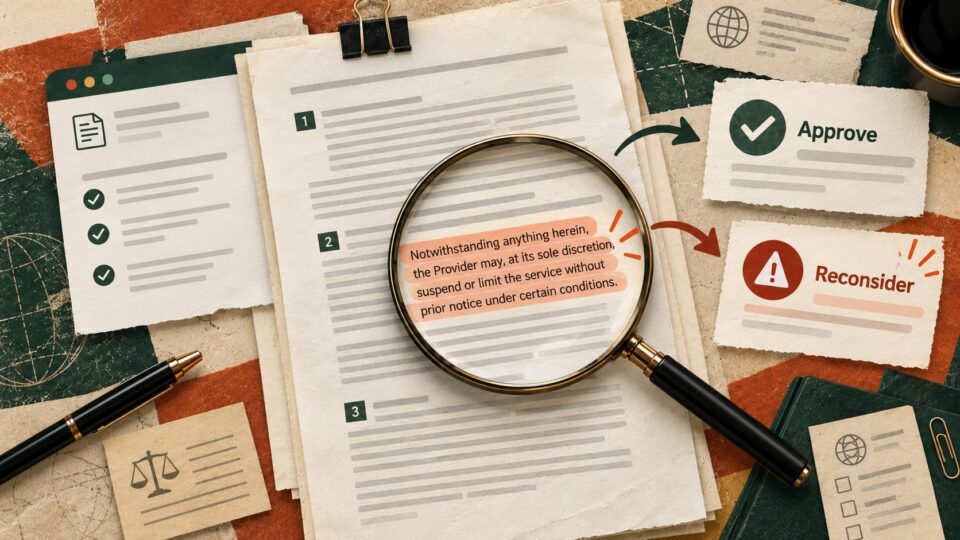
The US National Institute of Standards and Technology identifies inaccurate or invented generative AI output as a risk worth managing. The UK government’s AI Playbook calls for human oversight and validation where consequences matter. Those principles become practical when you identify which assumptions are carrying a recommendation.
Do not ask only why AI prefers option A. Ask what would make option B the better choice.
See how one assumption changes a campaign choice
A small marketing team asks AI whether to promote a new service through email or a live webinar. AI chooses email because it appears faster and cheaper. But its answer assumes the team has 1,200 usable, opted-in contacts. The approved list actually has 420.
That does not automatically make a webinar better. It means the email recommendation is conditional. The team must check list quality, response expectations, production effort and the actual goal before choosing.
The four-row decision reversal card
- Recommendation Write the suggested action in one sentence.
- Decisive assumption Identify the uncertain fact most likely to change it.
- Alternative case Replace that fact with one plausible different condition.
- Evidence owner Identify the record or person who can verify it.
Label the alternative as a test case, not a new fact.
Try this now in ten minutes
Use an approved AI tool and remove private customer information first. Paste the recommendation, ask for its assumptions and rank them by how strongly they affect the result. Choose one assumption you can check against a real record. Compare the original case with a plausible alternative while keeping the goal unchanged.
Copy-paste prompt
Act as a careful decision reviewer. Here is an AI recommendation I am considering – [paste the recommendation]
My goal is – [state the outcome and deadline]
List up to five assumptions behind this recommendation. Separate facts provided by me from your inferences. Rank the assumptions by how likely a change would reverse the decision.
Compare Case A using the original assumption and Case B using one realistic alternative. Keep the same goal and constraints. Explain what changes, what remains unknown and whether the action should change.
Do not invent costs, conversion rates, permissions or evidence. Mark missing inputs as Needs verification. End with three questions for the human owner and one low-risk test.
Verify Check each number against the source record. Confirm that the decision changes because of the assumption, not because the assistant quietly changed the goal.
Look for a real reversal, not a rewritten answer
In the campaign example, the team confirms 420 eligible contacts in its CRM. It may compare a small email test with a webinar invitation experiment, using agreed success measures. Neither option wins until the missing evidence is checked.
The same method works for subscriptions, where paid-seat count matters, for vendor choices, where switching costs matter, and for delivery dates, where approval time matters. The useful output is the fact to verify, not a longer AI explanation.
Five checks before acting
- Is the decisive assumption supported by a real source?
- Is the alternative case plausible?
- Did AI keep the goal and constraints fixed?
- Can the responsible person confirm the inputs?
- Can you run a small reversible test first?
Keep the final judgement with a person
The UK Cabinet Office’s hidden AI risks guidance encourages organisations to identify risks that can be missed during adoption. A decision reversal test is a lightweight habit inspired by that principle, not a substitute for specialist review in high-stakes work.
Try it on one routine choice today. Save the first recommendation, the alternative case and the verified fact together. If the recommendation survives, your confidence is better grounded. If it flips, you have found the question worth answering before committing.
Sources
NIST – AI Risk Management Framework and Generative AI Profile
UK Government – Artificial Intelligence Playbook
UK Cabinet Office – Hidden AI Risks Toolkit