Difficult work conversations often go wrong before they begin. You know the issue, but the wording gets vague, too soft or unexpectedly sharp once the conversation starts.
AI can help here without writing a speech for you. Use it as a rehearsal partner. Give it the facts, the outcome you want and the boundaries you need to keep. Then practise the conversation against a few realistic reactions.
The goal is not to sound polished. The goal is to enter the real conversation knowing what you need to say, what you should not assume and how you will respond if the other person reacts differently than expected.
Start with facts you can actually defend
Before opening an AI tool, separate what happened from what you think it means. A useful structure is the Situation, Behavior and Impact model from the Center for Creative Leadership. It keeps the conversation anchored in a specific situation, an observable behaviour and the impact that followed.
That means replacing a line such as You never take ownership with something closer to On the last two client handovers, the final status update came after the agreed deadline. I had to confirm the open items directly with the delivery team, which delayed the client update.
The second version gives you something concrete to discuss. It also gives AI better material to work with.
Write these four things before you rehearse
- The situation what happened and when.
- The behaviour what you directly observed.
- The impact what changed because of it.
- The outcome what you need after the conversation.
Use AI to test the conversation, not decide who is right
AI is useful when it helps you hear how your wording might land. It is less useful when you ask it to judge the other person or confirm your assumptions about their motives.
Keep the role narrow. Ask the AI to simulate plausible responses, point out language that sounds accusatory and help you restate the same point more clearly. Do not ask it to diagnose personality, infer intent or decide whether someone is being difficult.
Try this with a realistic work example
Imagine you need to speak with a colleague who keeps sending client inputs late. You are frustrated because the delay is starting to affect your own delivery, but you also know the colleague is handling several projects.
Your first instinct might be to say I need you to be more responsible with deadlines. That is broad and easy to argue with.
A stronger version is more specific. For the last two client updates, I received your inputs after the agreed cut-off. I then had less time to review the final response before it went out. For the next update, I need your section by 3 pm on the agreed day. If that timing is not workable, I need to know by noon so we can adjust the plan.
Now the conversation has something to work with. The request is visible, the impact is clear and there is room for the other person to explain a constraint you may not know about.
Use this prompt as your rehearsal partner
Copy-paste prompt
Act as a neutral rehearsal partner for a difficult work conversation.
Here are the facts I can directly support.
[Describe the situation, observed behaviour and impact.]
The outcome I need is.
[State the practical change, decision or agreement you need.]
First, identify any wording that sounds vague, accusatory or based on an assumption about intent. Rewrite only those parts while keeping the message direct.
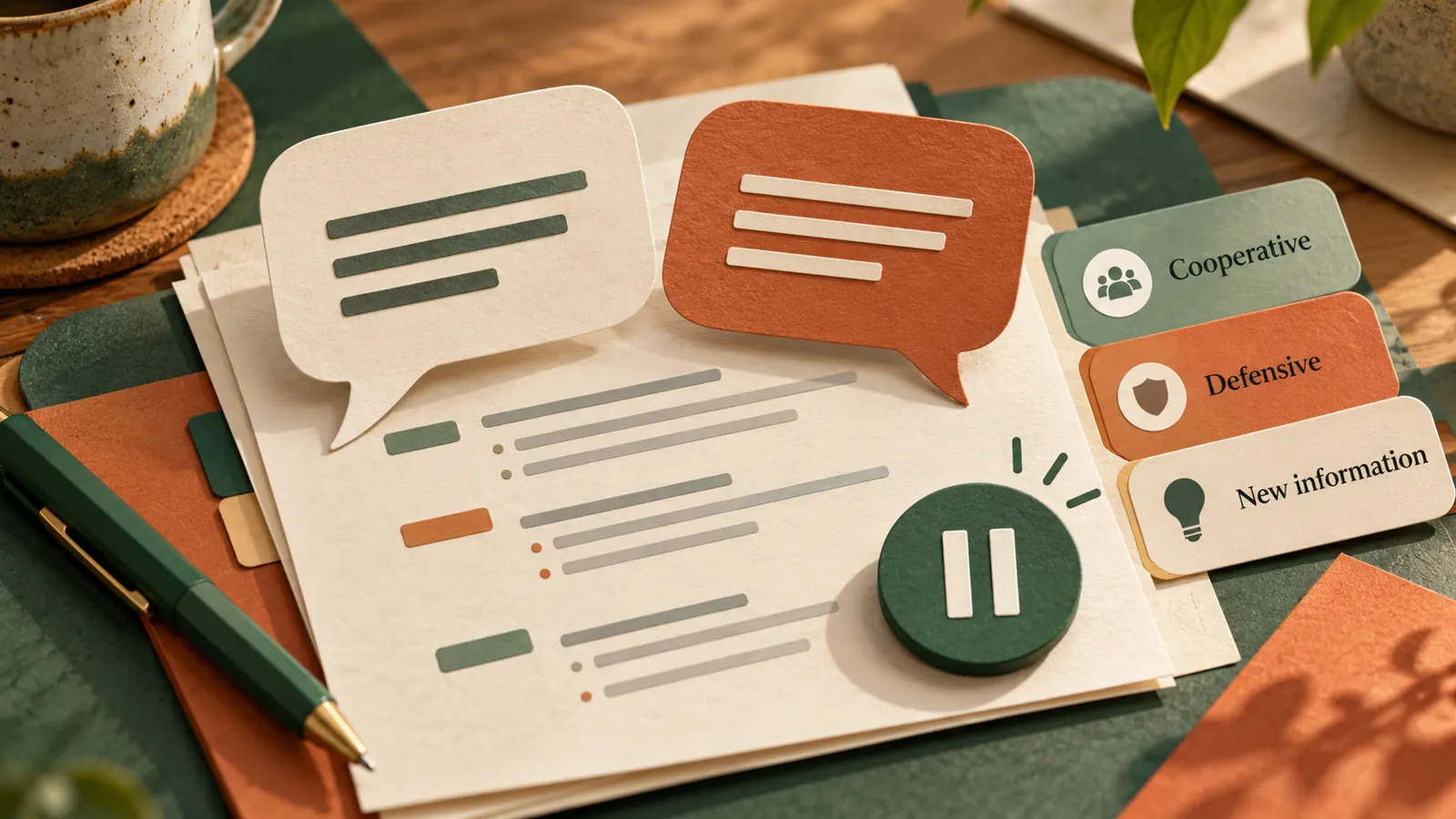
Then role-play three realistic responses from the other person. One should be cooperative. One should be defensive. One should introduce a reasonable constraint I may not know about.
After each response, pause and let me answer. Then tell me whether my answer stayed specific, respectful and focused on the outcome. Do not decide who is right. Do not invent facts.
At the end, give me a short opening sentence, the one key request I should not lose and one question I should ask to understand the other person’s perspective.
Do three rehearsal rounds
The first round is for clarity. Can you explain the issue without a long backstory or labels such as careless, difficult or uncommitted?
The second round is for resistance. Practise what you will say if the person disagrees with your version of events, becomes defensive or shifts the discussion to something else.
The third round is for new information. This is the one people often skip. Ask the AI to introduce a plausible constraint that changes how you see the problem. Maybe the deadline was not visible, a dependency arrived late or two managers gave conflicting instructions.
This round matters because the real conversation may reveal something you did not know.
A useful rehearsal prepares you to stay clear when the conversation changes, not to force the conversation to follow a script.
What to keep human
Do not outsource the actual judgement call to AI. You still decide whether the issue is serious enough to raise, what evidence is fair to use and what outcome is reasonable.
Do not paste confidential HR information, private messages, medical details or sensitive client information into an AI tool unless your organisation explicitly allows it. Replace names and identifying details with neutral labels when possible.
For disciplinary, legal, harassment, discrimination or other high-stakes workplace matters, follow your organisation’s formal process rather than relying on a rehearsal prompt.
Two-minute check before the real conversation
- Can I describe the issue with observable facts rather than labels.
- Can I explain the impact without exaggerating it.
- Do I know the specific change or decision I am asking for.
- Have I prepared for information that could change my view.
- Can I ask one genuine question before I start defending my position.
AI can make a difficult conversation easier to practise. The useful part is not producing a perfect script. It is helping you enter the room with a clearer message, fewer assumptions and more room to listen.
Sources
Center for Creative Leadership. SBI Feedback Model and Talent Development Conversations
Center for Creative Leadership. Use SBI to Understand Intent