You submit a job application and receive a rejection. The obvious assumption is that a recruiter or hiring manager decided you were not a fit. Increasingly, software may have influenced what happened before a person ever looked closely at the application.
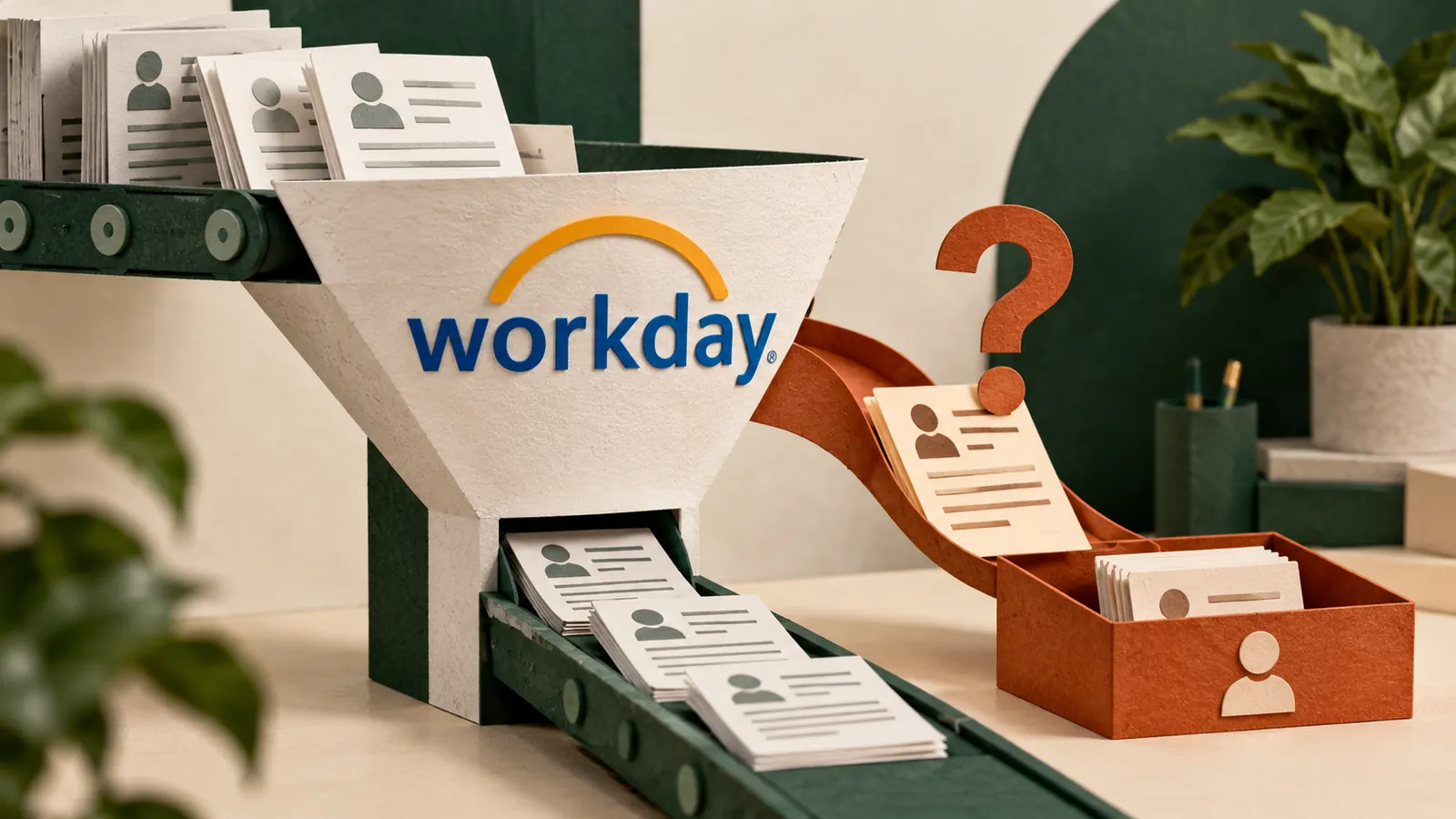
A closely watched U.S. lawsuit involving Workday is now testing a difficult question if an AI-powered hiring system allegedly produces discriminatory outcomes, who is responsible – the company using the software, the vendor that built it, or both?
Reuters reported on September 21 that job seekers are seeking class-action status in litigation alleging Workday’s hiring tools discriminated against applicants. Workday denies wrongdoing and says its software evaluates job qualifications rather than protected characteristics. The litigation remains unresolved.
Hiring AI does not need to be a chatbot to affect you
Much of today’s AI conversation focuses on generative tools such as ChatGPT and Claude. Hiring automation predates that boom. Employers have long used software to rank, filter and manage large pools of applicants.
That makes this case particularly useful. The question is not whether a futuristic autonomous agent refused somebody a job. It is how responsibility works when software is part of an ordinary business process and its output may affect real people.
What applicants can control
You cannot see every screening system behind an application form, and trying to reverse-engineer every algorithm is unlikely to help. You can make the information you control easier to interpret.
Use clear job titles and conventional section headings. Describe relevant experience concretely rather than relying on clever wording. Where a role asks for specific skills you genuinely have, state them plainly. Keep formatting readable enough that both software and a person can understand the chronology.
None of that guarantees progression, and applicants should not assume every rejection came from an algorithm. It simply reduces avoidable ambiguity in the application itself.
Employers have a different problem
For employers, buying an AI-enabled hiring tool does not eliminate the need to understand how it is being used. Teams need to know what information influences screening, where automated recommendations enter the process, how outcomes are monitored and where people can review unusual cases.
A vendor promising efficiency is not the same thing as an organization having a defensible hiring process.
The bigger lesson goes beyond recruitment
The same accountability problem will appear anywhere organizations put AI between a person and an important outcome lending, insurance, employee evaluation, customer support escalation and access to services.
As AI becomes less visible inside ordinary software, people may not always know that an automated model helped shape the result. That makes transparency, review and accountability more important rather than less.
The everyday takeaway
If you are applying for work, write for clarity first. Make the evidence of your experience easy for both machines and people to find, without stuffing an application with keywords you cannot support.
If you are using AI to make or support decisions about other people, ask a harder question than whether the tool saves time can you explain what role it played, check the outcome and intervene when something looks wrong?
Quick answers
Has a court ruled that Workday discriminated?
No. The allegations are being litigated, Workday denies wrongdoing, and the case remains unresolved.
Does every employer use AI to screen applications?
No. Hiring processes vary widely, and applicants generally cannot infer from a rejection alone whether automated screening affected the decision.